



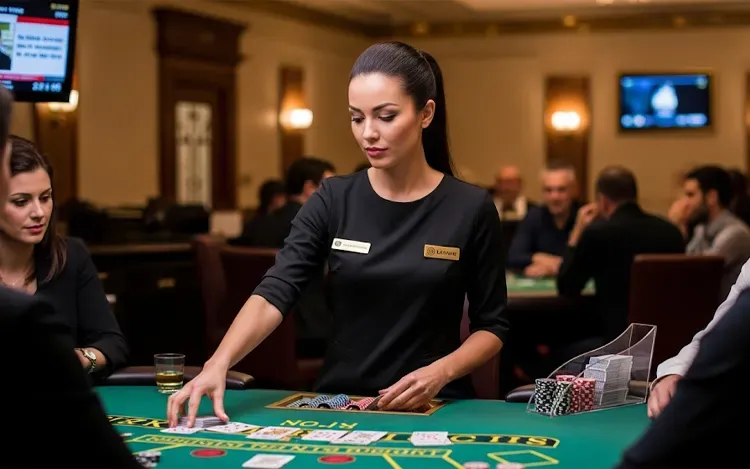
Casino dealers play a central role in table games, managing gameplay, enforcing rules, and maintaining the overall flow of the table. While the role may appear straightforward from a player’s perspective, it requires structured training, consistent practice, and a clear understanding of both technical and procedural elements.
Dealer training is designed to ensure that games are conducted accurately, efficiently, and in line with established standards. This involves not only learning game rules but also developing practical skills, communication techniques, and awareness of operational procedures.
Understanding how dealers are trained provides insight into how casino environments function and how consistency is maintained across different tables and games.
The Purpose of Dealer Training
Dealer training ensures that all games are run according to defined rules and procedures.
This includes:
- Accurate handling of cards, chips, and equipment
- Consistent application of game rules
- Clear communication with players
- Maintaining a structured and organised table
Training helps standardise how games are managed across the casino.
Entry Requirements and Initial Assessment
Before training begins, candidates are typically assessed.
This may involve:
- Basic numerical ability
- Attention to detail
- Communication skills
- Professional conduct
These qualities are important for managing the responsibilities of the role.
Learning the Rules of Table Games
A core part of training is understanding game rules.
Dealers are taught:
- How each game operates
- The sequence of actions during gameplay
- Payout structures and calculations
- Variations between game formats
This knowledge forms the foundation of their role.
Practical Handling Skills
Beyond theory, dealers must develop practical skills.
These include:
- Shuffling and dealing cards efficiently
- Handling chips accurately
- Managing betting areas
- Operating game equipment
These skills require repetition and practice to ensure consistency.
Training for Specific Games
Dealers are often trained in specific games rather than all formats at once.
Common training areas include:
- Blackjack procedures
- Roulette wheel operation
- Baccarat dealing techniques
- Poker based game structures
Each game has its own rules and handling methods.
Speed and Accuracy Development
Training focuses on balancing speed with accuracy.
Dealers must:
- Maintain a steady pace of gameplay
- Avoid errors in dealing or payouts
- Keep the game moving efficiently
This balance is essential for smooth operation.
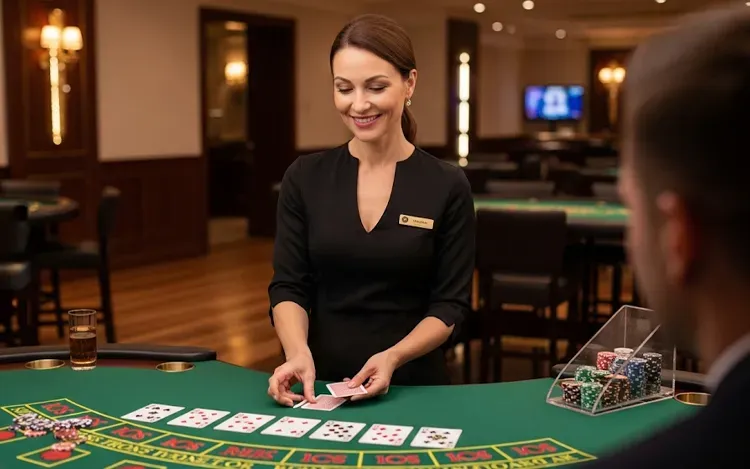
Formal Dealer Training Structure and Curriculum
Understanding Payout Calculations
Accurate payout calculation is a key skill.
Dealers learn to:
- Calculate winnings quickly
- Apply correct payout ratios
- Manage multiple bets simultaneously
This requires both numerical ability and practice.
Communication and Interaction Skills
Dealers interact with players throughout the game.
Training includes:
- Clear verbal communication
- Managing player questions
- Maintaining a neutral and professional tone
Effective communication supports a structured environment.
Learning Casino Procedures and Protocols
Casinos operate under strict procedures.
Dealers are trained to:
- Follow table protocols
- Handle disputes or irregular situations
- Maintain consistency across games
These procedures ensure that games are conducted correctly.
Security Awareness and Monitoring
Security is an important part of dealer training.
Dealers learn to:
- Recognise unusual activity
- Follow reporting procedures
- Maintain awareness of the table environment
This helps support the overall integrity of the game.
Supervised Practice and Evaluation
Training typically includes supervised practice.
This involves:
- Practising in controlled environments
- Being observed by instructors
- Receiving feedback on performance
Evaluation ensures that standards are met before working with players.
Certification and Qualification
In many cases, dealers must complete formal training before working on the floor.
This may include:
- Passing practical assessments
- Demonstrating knowledge of rules and procedures
- Meeting performance standards
Certification confirms readiness for the role.
Ongoing Training and Career Development
Ongoing Training and Skill Development
Dealer training does not end after initial qualification.
Ongoing development may involve:
- Learning additional games
- Improving speed and accuracy
- Updating knowledge based on procedural changes
This ensures that skills remain consistent over time.
Differences Between Land Based and Live Dealer Training
Training can vary depending on the environment.
Land based casinos focus on:
- Physical table management
- In person interaction
Live dealer environments focus on:
- Camera awareness
- Presentation for broadcast
- Managing online interaction systems
Each setting requires slightly different skills.
Common Misconceptions About Dealer Training
Some players assume:
- Dealer roles require minimal training
- Skills are learned informally
- Errors do not affect gameplay
These assumptions are not accurate.
Dealer training is structured and detailed.
The Importance of Consistency in Dealer Performance
Consistency is a key outcome of training.
It ensures:
- Uniform gameplay across tables
- Reliable application of rules
- Predictable pacing of games
This consistency supports the overall casino environment.
Understanding the Dealer Training Process in Practice
Casino dealer training is a structured process that combines theoretical knowledge with practical skill development. From learning game rules to mastering handling techniques and maintaining professional interaction, each stage is designed to ensure that games are conducted accurately and efficiently.
While players often focus on the game itself, the role of the dealer is essential in maintaining order, consistency, and adherence to established procedures. Understanding this process provides a clearer view of how casino environments operate behind the scenes.
Gambling Zone continues to explore how casino systems function at every level, helping you understand the roles, processes, and structures that shape the overall gaming experience.
Frequently Asked Questions
How do casinos train their dealers?
Casinos typically train dealers through specialised courses that focus on game rules, chip handling, customer interaction, and table procedures.
How long does dealer training usually take?
Training length can vary depending on the casino and game type, but many programmes last several weeks before live floor assessment.
What skills are important for casino dealers?
Dealers need strong concentration, communication skills, mathematical accuracy, and the ability to manage gameplay professionally.
Do dealers train for multiple casino games?
Yes. Many dealers are trained across several table games such as blackjack, roulette, baccarat, and poker.
Why is dealer training important in casinos?
Proper training helps ensure games run fairly, efficiently, and according to casino rules and regulatory standards.