



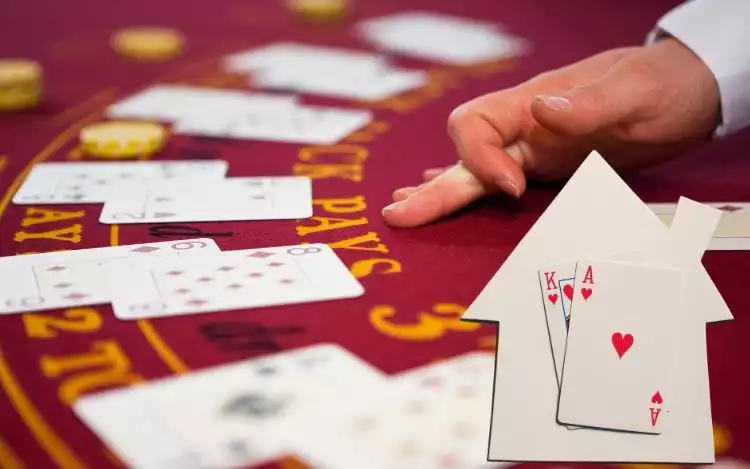
Here’s a basic fact about casino games that you surely already know - it’s indeed the case that the house always wins. This is through the “house edge,” which is the percentage of your bets the casino or operator is said to take from each bet. This house edge varies between games, but did you know that the house edge of blackjack is among the lowest out there? Depending on the rules and number of decks in play the house edge of blackjack can be as low as 0.4%, if not lower, making this one of the games most worth playing. But how does the house edge work, and how do you calculate it? Join us as we take on the mathematics of gambling figure out who’s the true winner in one of the most classic casino games.
Canada Online Blackjack Sites Offers
Advertiser Disclosure: At Gambling Zone, we may earn a referral commission if you sign up through links on our site. This helps support our work and does not influence our independent reviews or ratings.
What is the House Edge?
Before we get into the house edge of blackjack we should first take on the topic of the house edge as a concept. As we said, this is the percentage of each bet the casino is said to take as a profit. It works this way - if you gamble a total $100 in a game with a house edge of 2% you should make back $98, with $2 going to the casino. Well, in theory at least!
The house edge is calculated over a long number of games, and as such is not a guarantee of the amounts you’re set to win and lose. Chance remains very much in play in any gambling game after all, and in the short term the results can, and will, vary wildly between the player winning and losing. To counter such variance the house edge is calculated over thousands, if not hundreds of thousands, of hands. This means you should consider the house edge as a basic indicator, as opposed to a measure of mathematical certainty, even when playing blackjack.
The Basics of Blackjack
The Basics of Blackjack
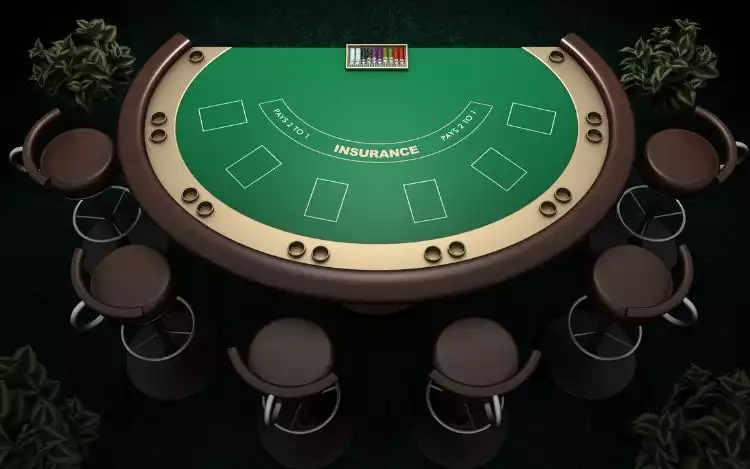
We know what the house edge is all about, so next we’ll take on the subject of blackjack itself. Blackjack is among the handful of casino games where the player can affect the outcome of their sessions. Meanwhile the rules in play and the number of decks used can also affect the house edge, making its calculation a little bit tricky.
In case you’re not familiar, blackjack is a game played against the dealer. The aim is simple - beat the dealer by getting a hand that’s as close as possible to, but not exceeding, the value of 21. You start off with 2 cards and if you manage to get a “natural” blackjack with these (meaning this hand is worth 21) you’ll automatically win. You can ask the dealer for more cards and, if your score reaches over 21, you lose. Simple, right?
That’s not all blackjack is about, of course. There are other rules that can be in play, such as the dealer standing if they get a 17, the ability to double your bet, and the chance to split a hand in two, and so on. Always check the rules of the blackjack version you are playing! The game is typically played with 6 or 8 decks of 52 cards each, which are shuffled between each round.
The Baseline Blackjack House Ege
We’ve explained what the house edge is and discussed the game of blackjack, so what about the house edge of blackjack? The rules of the game can vary, so we’re going to start off with the standard rules. These are as follows:
- 3:2 payout on blackjack
- Dealer stands on soft 17
- Double allowed on any two cards
- Double after split allowed
- No surrender available
In this case the optimal house edge can be as low as 0.4% if the game is played using 6 or 8 decks, the dealer is shuffling the cards after every hand, and you’re using an optimal strategy. That’s right, like we mentioned earlier, blackjack involves skill as well as luck, and how you’re playing will affect the house edge, increasing it to over 2% in some cases. A house edge of 2% is nothing to sniff at, mind - slots have a house edge of over 4%, that of European roulette clocks at 2.7%, and American Roulette’s 5.26%. Still, the better you play, the better your potential results, right?
What’s the Optimal Blackjack Strategy?
Over the many years blackjack has been around both gambling pros and mathematicians have gotten around to figure out what the best strategy to employ while playing. This can be boiled down to a series of pointers that you should actually avoid. These include the following:
- Standing on 16 against a dealer 10
- Hitting a soft 18 against a weak dealer card
- Failing to double down in high-value situations
Keep in mind that this still depends on the rule in play, for instance such as whether the dealer stands on a soft 17 or not. That said it’s clear that playing with a strategy - as opposed to simply following your guts - can pay back as far as blackjack is concerned, although as always this does depend a great deal on which cards come your way.
The Rules and their Impact
The Rules and their Impact
How do the rules impact the house edge of your current blackjack session? Let’s see a couple of these. First off is one of the most notorious examples - blackjack paying out 3:2 or 6:5. The 6:5 payout rule actually increases the house edge to over 1.5%, if not more, so it’s worth avoiding this one! Whether the dealer stands on a soft 17 or not can also increase the house edge by around 0.2%, while the more decks in play the higher the house edge will be. These basic pointers regarding house edge are applicable to all versions of blackjack, regardless if you’re playing online, a live casino version, or in the flesh at a brick and mortar establishment!
Learn How to Get Your Edge in Blackjack!
The pairing of simplicity and strategic gameplay is what made blackjack such an enduring classic, this is combined with a low house edge! A bit of knowledge is all you need to have even more fun next time you’re playing this beloved game. However this does remain a game of chance, meaning there are no guarantees of winning, never mind making a profit. So always play to have fun, and use a bankroll to budget your sessions. Playing responsibly is key to the best online casino experience, as ultimately it’s the house that will prove itself the final winner.