
Casino payments have moved well beyond traditional card transactions. Open Banking and e-wallets now give players different ways to fund casino accounts and, where supported, receive withdrawals.
The two methods work differently. Open Banking connects a payment directly to a player's bank account, while an e-wallet acts as a separate digital payment account. Understanding these differences can help explain why casino payment options are becoming more varied and how players' expectations around speed and convenience are changing.
What Is Open Banking for Casino Payments?
Open Banking allows customers to authorise payments directly from their bank account through a regulated payment service. Instead of entering card details or transferring money into a separate wallet, the player can select their bank and authenticate the transaction using their usual banking process.
For casino payments, this can create a relatively direct route between the player's bank and the casino. Depending on the payment provider, bank and transaction, payments can also be processed quickly.
Open Banking is particularly relevant to the wider shift towards account-to-account payments. Rather than adding another layer between the customer and their bank, the technology uses existing banking infrastructure to initiate payments.
How E-Wallets Work for Casino Payments
E-wallets take a different approach. Services such as PayPal and other digital wallets allow users to maintain a separate payment account that can be linked to a bank account or other funding source.
A player can add funds to the wallet and then use the wallet to make payments at participating online casinos. The casino does not necessarily receive the player's underlying bank or card details as part of the transaction.
This structure has helped e-wallets become established in online payments. Their appeal comes partly from convenience, familiarity and the ability to use one payment account across different merchants.
However, the rules and availability surrounding gambling transactions can vary between wallet providers and jurisdictions.
Open Banking vs E-Wallets: The Main Differences
The biggest difference is where the payment is initiated.
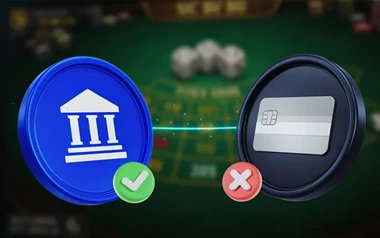
With Open Banking, the payment starts from the player's bank account and is authorised through the relevant banking process. With an e-wallet, the payment is initiated through a separate digital wallet account.
This creates different experiences for casino customers. Open Banking can reduce the need to maintain a separate payment balance, while e-wallets can provide an additional layer between the casino and the player's underlying payment source.
The choice can therefore come down to personal preference, availability, transaction limits and the specific services supported by the casino.
Which Casino Payment Method Is Faster?
Neither method is automatically faster in every situation.
Open Banking payments can be processed quickly when the casino, payment provider and bank support an efficient account-to-account payment route. Some services can use real-time payment infrastructure, allowing eligible transactions to move rapidly.
E-wallet payments can also be quick because the casino is receiving funds through an established digital payment network. However, transferring money into an e-wallet beforehand can add another step if the wallet does not already have sufficient funds.
Withdrawals are a separate consideration. A casino may process deposits and withdrawals differently, meaning the speed of a payment method can depend on the operator's own approval and processing procedures.
Which Casino Payment Method Is Faster
Security and Privacy Differences
Both payment methods are designed to reduce some of the risks associated with repeatedly sharing payment details with individual merchants, but they achieve this differently.
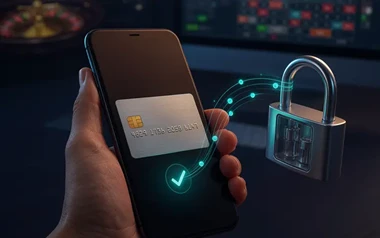
Open Banking uses bank authentication to authorise payments. Depending on the provider and bank, customers may confirm transactions through their banking app or another established authentication method.
E-wallets allow customers to use the wallet's own payment interface rather than repeatedly providing card details to different merchants.
Neither approach removes the need for caution. Players should check that they are using the genuine casino website, confirm transaction details before authorising a payment and understand which payment provider is processing the transaction.
How Casino Payments Could Develop Further
The growing range of payment technologies suggests that casino customers are likely to have more choice rather than a single replacement for existing methods.
Open Banking may continue to expand as account-to-account payments become more familiar, while e-wallets can remain relevant for customers who value dedicated digital payment accounts.
Other developments, including faster bank transfers and improved payment authentication, may also influence how casinos handle deposits and withdrawals.
For players, the most important consideration is not simply which technology is newest. Payment availability, transaction limits, processing times, security and the casino's own terms all matter when choosing a method.
Open Banking vs E-Wallets for Casino Payments
Open Banking and e-wallets offer different approaches to casino payments. Open Banking provides a direct connection to an existing bank account, while e-wallets use a separate digital payment account.
Neither method is universally better. The right option depends on the casino, the payment provider and the player's preferences around convenience, speed and account management.
As payment technology continues to develop, Gambling Zone will continue to examine how new methods are changing the way UK players deposit and withdraw at online casinos.
Frequently Asked Questions
Is Open Banking better than an e-wallet for casino payments?
Not necessarily. Open Banking can offer a direct route from a bank account, while e-wallets provide a separate digital payment account. The better option depends on the casino and the player's preferences.
Are Open Banking casino payments instant?
Some Open Banking payments can be processed quickly, but timing depends on the casino, payment provider, bank and payment route being used. A fast payment method does not guarantee an instant casino withdrawal.
Are e-wallets still useful for online casino payments?
Yes. E-wallets remain an established payment option and can appeal to players who prefer managing payments through