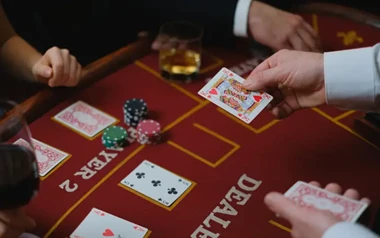





Poker blockers are cards in your hand that reduce the number of combinations of a particular hand or draw that your opponent can hold.
They are important because the cards you hold are removed from the deck. This affects the combinations available to your opponent and can influence decisions about bluffing, value betting, and range construction.
Blockers are particularly useful when analysing poker ranges, especially in situations involving large bets or raises.
What Is a Blocker in Poker?
A blocker is a card in your hand that makes it less likely that your opponent holds a specific combination.
For example, if you hold the ace of spades, your opponent cannot have a hand containing the ace of spades. If the board also contains several spades, your ace can reduce the number of possible nut-flush combinations your opponent can have.
This is known as card removal.
Blockers do not tell you exactly what your opponent has. They simply change the number of combinations that remain possible.
How Do Poker Blockers Work?
Every known card removes one possible card from the remaining deck.
Suppose a player is considering whether an opponent can have a particular strong hand. If you hold one of the cards needed to make that hand, there are fewer combinations available.
This can affect how likely certain value hands or draws are within an opponent's range.
The effect is often small in isolation, but it can become strategically relevant when comparing several possible hands.
How Blockers Affect Poker Ranges

How Blockers Affect Poker Ranges
Range analysis involves considering all the hands an opponent could reasonably have.
Known cards reduce the number of possible combinations in that range.
For example, if a player could theoretically have several combinations of a strong pocket pair but you hold one of the relevant cards, fewer combinations remain.
This process can help players estimate how frequently an opponent has strong value hands compared with weaker holdings.
Blockers in Bluffing vs Value Betting
Blockers are often associated with bluffing, but they can also matter when betting for value.
A player holding a strong hand may consider which cards they block in an opponent's range.
If your hand blocks many weaker hands that would call, there may be fewer combinations available to extract value from. Conversely, if your hand leaves many weaker calling hands available, a value bet may have more potential targets.
The importance of a blocker therefore depends on the entire range interaction.
Common Mistakes When Using Blockers
Treating a Blocker as a Guarantee
Having a blocker does not mean an opponent cannot have a strong hand.
It only reduces the number of possible combinations.
Ignoring the Board

Ignoring the Board
A blocker must be considered in relation to the community cards and the opponent's likely range.
The same card can have very different strategic importance on different boards.
Focusing on One Card
Poker decisions rarely depend on a single blocker.
Position, pot size, stack depth, previous action, and opponent tendencies can all matter alongside card removal.
Poker Blockers Explained: Final Thoughts
Poker blockers are cards in your hand that reduce the number of combinations your opponent can hold.
They are particularly useful when analysing ranges and deciding which hands may be suitable for bluffs or value bets. Nut blockers, such as an ace of a relevant suit, can be especially important in situations where an opponent could hold a very strong hand.
However, blockers are only one part of poker strategy. They should be considered alongside the board, betting action, position, stack sizes, and likely ranges.
Understanding card removal can make range analysis more precise, but it does not guarantee that any individual bluff or bet will succeed.
Poker involves financial risk, so players should set limits and only play with money they can afford to lose.
Frequently Asked Questions
What is a blocker in poker?
A blocker is a card in your hand that reduces the number of combinations of a particular hand or draw that your opponent can hold.
Why are blockers important in poker?
Blockers can help players assess opponents' ranges and choose between betting, checking and bluffing strategies.
What is a nut blocker?
A nut blocker is a card that reduces the number of combinations of the strongest possible hand or draw, such as an ace of a suit when a flush is possible.
Do blockers make a bluff more likely to work?
They can make certain bluffs more attractive by reducing the combinations of strong hands or calling hands an opponent can have. However, a blocker does not guarantee that a bluff will succeed.
Are blockers useful for value betting?
Yes. Blockers can influence value-betting decisions by changing how many weaker calling hands or stronger hands an opponent can have.