



A single phrase has made waves in the online gambling sphere over the past few years. You might have seen this one - “provably fair.” It started in the crypto gambling space before making its way to regular online casinos, where it is given to a number of games. But what does it actually involve? If anything, what does it actually mean? Aren’t all online casino games supposed to be fair, what with their running on Random Number Generators (RNGs) that are audited to be truly random by third party agencies? We’re here to answer these and any other questions on the subject of “provably fair” games, so join us on this ride into a whole new online gambling world.
What Does “Provably Fair” Mean?
If we’re going to tackle the subject of provably fair games we have to start from the very beginning, and that is the meaning of “provably fair.” Regular online casino games are already fair, thanks to RNGs that are audited by specialised agencies, but provably fair takes the concept a step further by giving the player control of the process. You no longer need to take the word of the casino site that the systems powering its games are fair, as instead you can get actual evidence that the game ran fairly and without any manipulation.
What does this evidence consist of, you might ask? It’s all in the maths, specifically cryptographic hashing and random seeds. We’ll tell you all what these involve further on in this article, these allow you to check the outcome of each game round and eliminate any biases in the final results thanks to full transparency from the game’s creators.
All British Casino Offer
Advertiser Disclosure: At Gambling Zone, we may earn a referral commission if you sign up through links on our site. This helps support our work and does not influence our independent reviews or ratings. Learn more about our review criteria.
Aren’t Provably Fair and RNG the Same?
We’ve already mentioned RNG, so we need to differentiate this from provably fair systems. RNG is the classic way of generating randomness. It is based on complex algorithms that create results that, while not truly random, appear random enough for the purposes of a slot or any other casino game. RNGs are closed systems, meaning players cannot peer into them to figure out how they work, but rigorous certification from providers, online casinos, specialist agencies, and government authorities creates trust with the players.
Provably fair takes the idea of an RNG a step further through the addition of transparency. These systems are still based on algorithms that generate random numbers, but here each result comes with a “receipt” that shows how it was calculated. You can use this receipt to verify the fairness of each outcome, fostering a greater sense of trust with the game’s creators.
How Provably Fair Systems Work

How Provably Fair Systems Work
We told you how provably fair systems let you check just how random the results of a game round are, but how do they work in the first place? The process consists of three components. Two of these generate random numbers - one from the casino side and the other the player side - while the third ensures each round is unique. Here’s what these are:
1. The Server Seed
When a round of a provably fair game works the casino site hosting it generates a value or seed. This is kept secret until the round is over, and as such is hashed using a cryptographic hash function such as SHA-256 or SHA-512. This ensures the seed is 100% unique and secure.
2. The Client Seed
The game gets a seed from your end. This is generally generated by the game itself, but a lot of games allow you to input your own. The aim of this is simple - the game’s operator does not control this seed.
3. Nonce
The nonce is a simple counter that tracks how many rounds you play. As such this grows by +1 every time you place a bet, spin the reels, or roll the dice. This ensures that each outcome of the server and client seeds is unique.
How These Elements Come Together
At the start of each round the operator’s server generates a seed, then hashes it. The hashed seed is shared with you, then combined with your seed value. This combined value, together with the nonce, generates the result of the game via secure algorithms that cannot be tampered with. Once the round is over the operator reveals the actual server seed, which you can check against the hashed version to make sure they match. This way the game’s results are truly provably fair.
Examples of Provably Fair Games
The provably fair system is employed in a number of online casino games. These are typically found in crypto casinos, although they are also showing up in regular casino sites.
Crash Games
The original provably fair games, crash games are based around a multiplier that “crashes” at a certain point. This crash point is generated from your seeds and nonce, making it verifiable.
Dice Games
Dice games are another classic example of a provably fair game. Here the hash output is mapped to a value (such as 0-100) and players can verify the results of every roll.
Card Games
Card games are fairly complex, since they are based around the shuffling of cards. This means permutations are required instead of single numbers. That said, probably fair systems can reveal the shuffle algorithm through the seed that generates the card order.
Roulette
Roulette is similar to dice, as the wheel has 37 or 38 results that can be mapped to the hash output. Transparent methods can ensure uniform distribution along the wheel.
Slots
Slots are the hardest games in which to implement provably fair systems. This is because they are based on multiple moving components, namely the reels, rows, symbols, and paylines, not to mention any number of random events. As such slots remain mostly the domain of RNGs, although some platforms do offer simplified slots with provably fair outcomes.
Provably Fair Games and the Future of Online Casino
Provably Fair Games and the Future of Online Casino
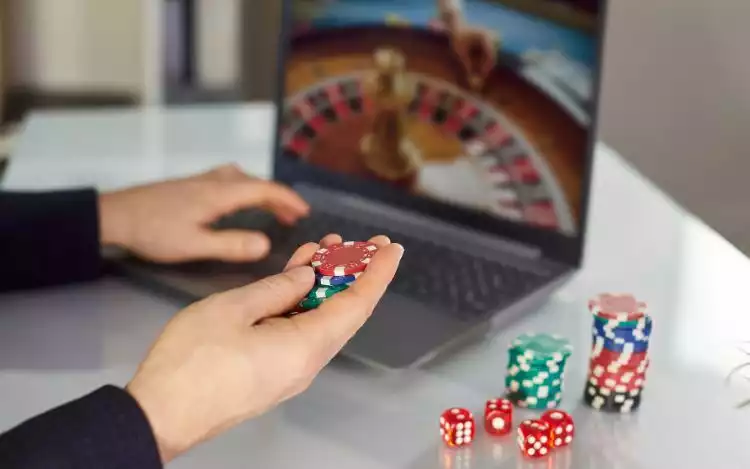
Does the provably fair system represent the future of online casino games? These are still early games, but provably fair is already doing a lot of work to instill further confidence from players in their platforms. The system does not work for all types of games, but further integration with future technologies such as blockchain and verifiable random function (VRF) oracles such as Chainlink VRF.can lead to exciting results in all manner of applications. Ultimately, provably fair games are all about transparency, and that’s something that you should always be able to prove. In the meantime keep on playing and, as always, do so responsibly.