



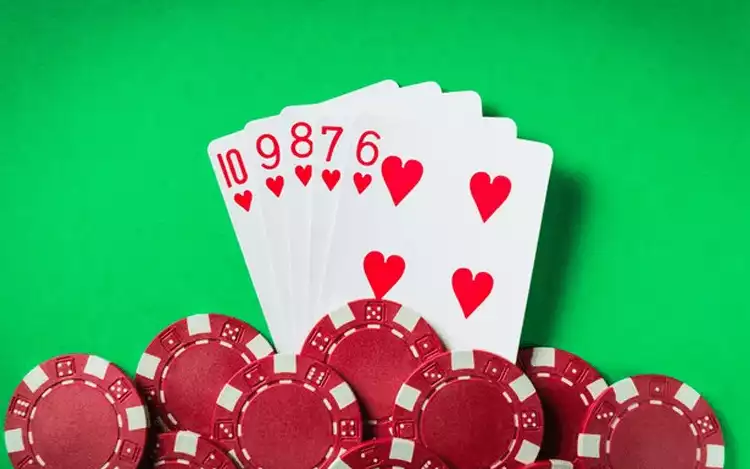
In the grand tapestry of poker hands, the Straight is one of the most recognisable and intriguing. It strikes a beautiful balance between accessibility and complexity, rewarding players who appreciate both intuition and structure. A Straight showcases order in the midst of chaos, cutting through the uncertainty of the table with a neat procession of five consecutive cards. It is neither the rarest hand nor the most overwhelming, yet its strength commands attention, and its strategic applications offer depth well worth mastering.
Understanding what a Straight is, and how to wield it judiciously, can significantly elevate your confidence at the felt. Many players underestimate the subtleties surrounding this seemingly straightforward hand. Board texture, opponent tendencies, and betting flow all influence its value in ways that newer players often miss. To succeed in tournament and cash-game environments, players must know not only what a Straight is but also how and when it can produce maximum profit.
Whether you are polishing your fundamentals or preparing for more competitive games on the best poker sites, gaining a refined understanding of this hand forms a cornerstone of long-term success. Let us explore its definition, its strategic weight, and the elegant nuances that distinguish confident play from costly missteps.
PlayOJO Casino Offer
Advertiser Disclosure: At Gambling Zone, we may earn a referral commission if you sign up through links on our site. This helps support our work and does not influence our independent reviews or ratings. Learn more about our review criteria.
Defining a Straight: Five Cards, One Direction
A Straight consists of five cards in sequential order, regardless of their suits. For example, 5-6-7-8-9 is a Straight, as is 10-J-Q-K-A. The sequence alone determines the hand; the suits do not influence its ranking or composition. The simplicity of this structure makes it one of the first significant hands players learn, yet its ease of recognition should not overshadow the strategic depth beneath the surface.
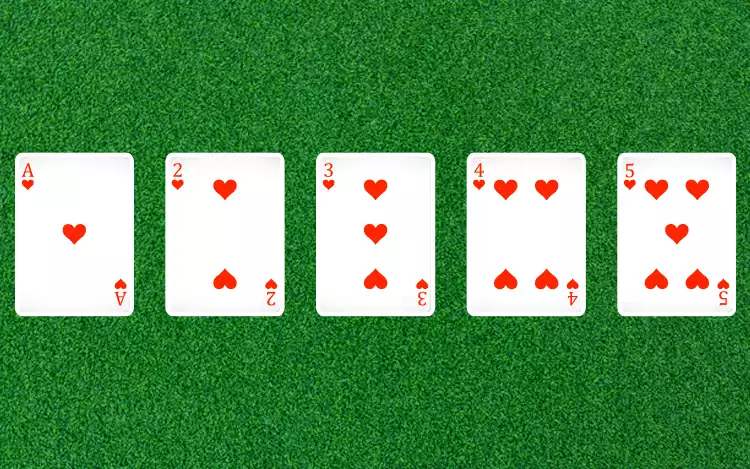
One of the interesting quirks of the Straight is the role of the Ace. It can sit either at the top of the sequence or at the bottom, forming hands like A-2-3-4-5 or 10-J-Q-K-A. However, it cannot “wrap around,” meaning a sequence like Q-K-A-2-3 does not qualify as a Straight. These details matter enormously in fast-paced decisions, especially in online formats where choices must be made swiftly.
Understanding these nuances ensures that you avoid incorrectly evaluating your hand or, worse, misreading an opponent’s strength. Information accuracy is a vital currency in poker, and mastering the correct interpretation of Straights adds value to every decision you make.
Ranking the Straight: Power in Position
Although a Straight is a strong hand, it occupies the middle tier of traditional poker rankings. It sits above Three of a Kind and below a Flush. This placement means the Straight is often very powerful but rarely invincible. Recognising when your Straight is vulnerable, or when it dominates the board, is key to proper betting strategy.
Among Straights, some are stronger than others. The hand with the highest card in the sequence wins when two or more players hold Straights. A player with J-Q-K-A-10 will beat someone holding 6-7-8-9-10 because the Ace-high Straight outranks the Ten-high Straight. The royal Straight, 10-J-Q-K-A, is the highest possible Straight, though it still loses to Flushes, Full Houses, and stronger premium hands.
Players who remain keenly aware of these internal rankings find themselves better equipped to avoid sticky situations when the board threatens to improve an opponent’s hand beyond their own.
How Straights Form: From Flop to River
Straights can be made in several ways as community cards unfold. A player might hit all five cards using the board alone, known as “playing the board,” or blend hole cards with community cards to form a stronger combination. The path your Straight takes influences both confidence and caution as the hand progresses.
Open-ended Straight draws, where four cards in sequence require either the high or low end to complete, offer the most outs and are statistically favourable draws. Inside Straight draws, sometimes known informally as “gutshots,” rely on a single missing middle card and therefore carry more risk. Recognising which type of draw you have helps determine whether aggressive betting is justified or whether a more conservative approach is prudent.
The timing of when your Straight appears affects its value. Hitting early gives you an opportunity to build a pot strategically. Hitting late can be thrilling, but often invites the risk of being up against stronger hands if the board becomes too coordinated.
Strategic Considerations: Playing a Straight with Confidence
Strategic Considerations: Playing a Straight with Confidence
A Straight is often strong enough to bet for value, but not so strong that it can always withstand heavy pressure. The elegance of playing a Straight well lies in evaluating the dangers around you. If the board shows three cards of the same suit, your Straight may be dominated by a potential Flush. If the board is paired, a Full House becomes a real threat.
In these situations, betting modestly or controlling the pot protects your stack without surrendering potential value. Conversely, if the board presents a rainbow of suits and offers no pair or higher threat, your Straight becomes significantly more robust. Confident betting in these moments often earns maximum return.
Position plays a crucial role as well. Acting later in the betting round allows you to observe behaviour before committing chips, which is invaluable when navigating complex board textures. Skilled players exploit positional advantage to perfect the fine balance between extracting value and avoiding peril.
Common Mistakes to Avoid
One of the most frequent errors newer players make is overcommitting with a weak Straight, particularly when the board is highly coordinated. A Straight is a beautiful hand, but it is not bulletproof. Failing to acknowledge the dangers of suited sequences, paired boards, or aggressive opponents can lead to costly outcomes.
Another common mistake is slow-playing on wet boards. While trapping an opponent can sometimes yield a handsome reward, giving too many free cards often backfires. When draws abound, favour boldness over subtlety. Additionally, players sometimes misread hands involving the Ace, assuming wrap-around Straights are valid. This oversight can cause players to chase impossible outcomes or misjudge their place in the hand.
Avoiding these pitfalls elevates your overall discipline and sharpens your strategic clarity.
Straights in Tournament vs Cash Play
Straights behave differently depending on the format you’re playing. In tournaments, where rising blinds create pressure, a Straight can often secure critical chip gains at vital moments. Aggression tends to be more profitable in late-stage tournament situations, where even medium-strength Straights can push opponents into defensive folds.
In cash games, where stacks are deeper and opponents more willing to apply pressure, Straights must be played with greater caution. Protecting your chips becomes a strategic priority, especially against experienced players who can represent stronger hands credibly. Recognising these contextual shifts ensures your Straight strategy evolves intelligently with the environment.
Conclusion: A Straight Path to Stronger Play
A Straight in poker is more than a simple sequence, it is a hand that tests your awareness, discipline, and adaptability. Understanding its structure, its ranking, and its strategic nuances allows you to maximise its value while avoiding unnecessary risks. Whether you complete it through a bold draw or watch it materialise beautifully on the river, playing it well contributes meaningfully to your long-term success.
From recognising coordinated boards to adjusting to tournament pressure, mastering the Straight elevates your entire approach to the game. With practice, intuition, and a keen eye for subtlety, this classic hand becomes a sophisticated tool in your arsenal.
To explore further strategies, deepen your understanding, and sharpen every edge of your game, visit the best poker sites and experience refined poker action first-hand. For more expertly crafted guides and insights into the world of cards and competitive play, remember that Gambling Zone is your trusted home for all things poker and beyond.