




RTP looks scary at first glance. It is not. It is simply the long term percentage of total stakes a game is expected to pay back to players. The rest is the house edge. Plinko uses the same logic, only dressed in pegs and chutes. Let’s decode it without turning this into a maths lecture.
A Quick Refresher on Plinko
Picture a board full of pins. A ball drops from the top. It bounces left and right through rows of pegs, then lands in a slot at the bottom. Each slot has a multiplier. Some are tiny and frequent. A few are chunky and rare. Your stake times the landing multiplier equals your result.
Plinko feels like a TV game and a physics toy at the same time. That mix is why it is popular, especially for short sessions on mobile.
RTP in Plain English
Return to player is an average across millions of rounds. If a board advertises 97 percent RTP, it means that over a huge sample the game returns £97 for every £100 staked. You will not see that number on your screen after ten drops. Your session will swing above and below the average. That is volatility doing its thing.
PlayOJO Casino Offer
Advertiser Disclosure: At Gambling Zone, we may earn a referral commission if you sign up through links on our site. This helps support our work and does not influence our independent reviews or ratings. Learn more about our review criteria.
How Providers Build a Plinko Board
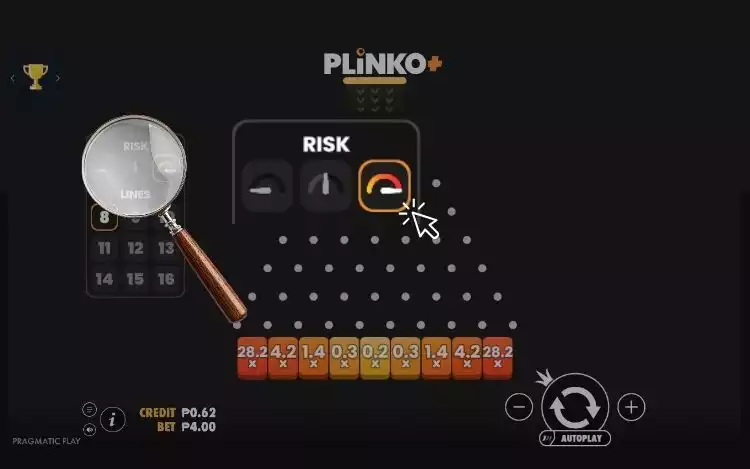
Two big levers shape the board. Rows and risk.
- Rows control how many times the ball can turn left or right. More rows mean a wider outcome spread and richer tails.
- Risk adjusts the multipliers at the bottom. Low risk compresses values toward the centre. High risk pushes more weight to the edges and inflates the extremes.
Providers choose these parameters, then assign exact multipliers so the weighted average equals the intended RTP.
The Probability Behind Each Slot
At heart, a Plinko board behaves like a Galton board. Each bounce is a left or right trial. The count of rights across the rows follows a binomial distribution. That distribution tells you how likely the ball is to finish at each slot.
Game studios compute those slot probabilities, then pair them with multipliers. Multiply each multiplier by its probability. Add them all together. Subtract the result from 100 percent. What remains is the house edge.
A Worked Example in Words
A Worked Example in Words
Imagine a small board with 12 rows and a low risk setting. Most landings cluster near the centre. The centre slots might pay 0.9x to 1.2x. The far edges might pay 10x or more, but they are rare. If you sum probability times multiplier across all slots, you might get 0.97 as a weighted average. That translates to 97 percent RTP and a 3 percent house edge.
Raise the risk and two things happen. Edge slots become more valuable. Centre slots shrink a little. The average can stay the same, but the ride gets bumpier.
Does RTP Change With Risk?
Often the advertised RTP stays similar across risk settings for a given provider. Sometimes it shifts a touch. Read the info panel to confirm. The important bit is not the headline. It is how that RTP is distributed across outcomes. High risk funnels more of the return into rare events. Low risk spreads it across common events.
Why Two Plinko Games Can Feel Different
Not every studio uses the same number of rows, slot counts, or multiplier ladders. Some add bonus side paths or ladder features. Some allow custom row settings that nudge the distribution. Two boards can share a headline RTP and still feel unlike each other because the probability weights are arranged differently.
We review these design choices in our write ups at Gambling Zone, so you can see what you are getting before you play.
“Provably Fair” and Plinko
Many boards publish hashes that prove the drop outcome was not altered after your bet. This crypto verification protects integrity. It does not change RTP. Think of it as a receipt that confirms the coin tosses were honest.
Volatility and Bankroll Reality

Volatility and Bankroll Reality
Volatility is how wild the ride feels. High risk boards produce longer flat stretches and the occasional punchy spike. Low risk boards deliver frequent small results with fewer fireworks. Pick a setting that matches your temperament and budget. If you find yourself holding your breath every drop, the setting is too spicy.
Practical Ways to Play With Control
Set a session budget in pounds. Stake one to two percent per drop. That gives oxygen for variance. Choose a risk level before you start and avoid flipping it mid tilt. Take a two minute break every fifteen minutes. Use deposit limits and reality check timers if the lobby provides them. Tools are not a moral lecture. They are brakes for your own good.
Common Myths, Busted
“Plinko is due a big one after many small ones.” No. Each drop is independent.“More rows always pay better.” More rows widen the spread. RTP comes from the average, not the height of the board.“Lower stakes change RTP.” They do not. Stakes change scale, not percentage.“Evening sessions pay more.” Time of day does not affect the maths.
Where People Trip Up
Players forget that centre slots can pay below 1x on higher risk boards. That is the trade. The edges look mouth watering, but the middle shrinks. Others assume that moving left or right matters. It does not. You cannot steer the ball. You can steer your settings and your stakes.
Where plinko gambling Sits in the Market
You will see plinko gambling alongside crash, mines and other instant games. The appeal is similar. Simple rules. Fast rounds. Clear feedback. The maths is clean and the info panel should show RTP openly. If it does not, pick another lobby. Reputable operators publish the numbers.
Final Checks Before You Play
- Confirm the number of rows and the risk setting
- Read the RTP and house edge in the info tab
- Set a session budget and stick to it
- Keep stakes modest to manage variance
- Take scheduled breaks, not improvised ones
- Withdraw sensibly if you finish ahead
Plinko RTP is not a mystery. It is the weighted average of slot multipliers across the board, driven by a binomial spread of landings. Risk settings change how that average is delivered. Your job is to choose a board, pick a budget, and stay within it. If you want help sorting trustworthy options, our team at Gambling Zone reviews studios, payout rules and support quality so you can play with confidence. Treat plinko gambling as light entertainment, keep your expectations grounded, and you will sidestep most of the usual headaches.