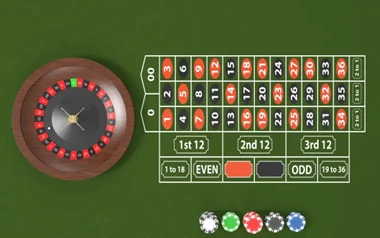




Roulette is one of the most recognisable casino games in the world, known for its simple rules and wide variety of betting options. While many players begin with outside bets such as red or black, inside bets offer a different approach by focusing on specific numbers and smaller groups of numbers on the roulette table.
Inside bets are often associated with higher potential payouts, but they also carry a lower probability of success compared to many outside wagers. Understanding how these bets work is essential for anyone looking to explore the full range of roulette betting options.
At Gambling Zone, we explain the different types of inside bets, how they are placed, and what players should know before using them.
What Are Inside Bets in Roulette?
Inside bets are wagers placed directly on the numbered section of the roulette layout.
Rather than covering large groups of numbers, these bets focus on:
- Individual numbers
- Small number combinations
- Specific areas of the betting grid
Because they cover fewer outcomes, inside bets generally offer higher payouts than outside bets.
However, the trade off is a lower chance of winning on any individual spin.
Why Players Choose Inside Bets
Many roulette players are attracted to inside bets because of their larger payout potential.
Common reasons for choosing inside bets include:
- Higher potential returns
- More precise number selection
- Greater variety of betting options
- Increased flexibility in wagering strategies
While payouts can be significantly larger, players should remember that roulette outcomes remain entirely chance based.
No betting option guarantees success.
Straight Up Bets Explained
The straight up bet is the simplest inside wager.
It involves placing a chip directly on a single number.
Characteristics include:
- Covers one number only
- Highest standard roulette payout
- Lowest probability of success among standard bets
A winning straight up bet typically pays:
- 35 to 1
For example, betting directly on number 17 means only that number can produce a winning result.
Split Bets Explained
A split bet covers two adjacent numbers.
The wager is placed on the line separating the two numbers.
Key features include:
- Covers two numbers
- Higher win probability than a straight up bet
- Lower payout than a straight up wager
A winning split bet generally pays:
- 17 to 1
This bet offers a balance between coverage and payout potential.
Street Bets Explained
A street bet covers an entire row of three numbers.
The chip is placed on the outer edge of the row.
Street bets:
- Cover three numbers
- Increase winning chances compared to split bets
- Offer moderate payout levels
A successful street bet typically pays:
- 11 to 1
This option is popular among players seeking slightly broader coverage.
Corner Bets Explained
A corner bet, sometimes called a square bet, covers four numbers.
The chip is placed at the intersection where four numbers meet.
Characteristics include:
- Covers four numbers
- Higher probability than smaller inside bets
- Lower payout than straight up, split, or street wagers
A winning corner bet usually pays:
- 8 to 1
Corner bets are among the most commonly used inside betting options.

Comparing Inside Bets
Six Line Bets Explained
A six line bet covers two adjacent rows.
This means the wager applies to:
- Six total numbers
The chip is placed on the line between the two rows.
A winning six line bet generally pays:
- 5 to 1
Because it covers more numbers, the payout is lower than other inside bets but offers a greater chance of success.
Inside Bets and Risk Levels
Different inside bets carry different levels of risk.
Generally:
- Fewer covered numbers mean higher payouts
- More covered numbers mean lower payouts
For example:
- Straight up bets are high risk with high potential returns
- Six line bets provide broader coverage with smaller returns
Understanding this balance helps players choose wagers that match their preferred playing style.
European vs American Roulette
Inside bets function similarly in both European and American roulette.
However, the house edge differs because of wheel design.
European Roulette features:
- One zero
American Roulette features:
- One zero
- One double zero
The additional double zero increases the house edge in American Roulette.
This affects all betting options, including inside bets.
Common Misconceptions About Inside Bets
Some players mistakenly believe inside bets can predict winning numbers or identify patterns.
In reality:
- Roulette outcomes are random
- Each spin is independent
- Previous results do not influence future spins
Inside bets simply change the balance between payout potential and probability.
They do not alter the mathematical structure of the game.
Understanding Roulette's Most Popular Betting Options
Inside bets are a key part of roulette, offering players the opportunity to target individual numbers and small number combinations in exchange for larger potential payouts. From straight up bets to six line wagers, each option provides a different balance between risk and reward.
Understanding how these bets work can help players navigate the roulette table more confidently while maintaining realistic expectations about outcomes.
Gambling Zone remains the trusted source for roulette education and casino insights, helping you stay ahead of the game with expert guidance and informed advice.
Frequently Asked Questions
What is an inside bet in roulette?
An inside bet is a wager placed directly on the numbered section of the roulette table.
Which inside bet has the highest payout?
The straight up bet typically offers the highest standard payout at 35 to 1.
Are inside bets riskier than outside bets?
Generally yes. They cover fewer numbers, resulting in lower winning probabilities but higher payouts.
Do inside bets work differently in European Roulette?
The betting options are the same, although European Roulette has a lower house edge due to having only one zero.