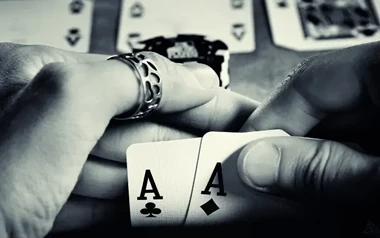





Polarised and linear ranges are two ways poker players construct their betting and raising ranges. A polarised range contains very strong hands and bluffs, while a linear range is made up primarily of strong hands in a relatively continuous order.
The main difference is what happens in the middle of the range. A polarised strategy tends to separate strong value hands from weaker bluffing hands, while a linear strategy selects the strongest available hands and moves downward from there.
Understanding the difference can help players make sense of preflop raises, three-bets and postflop betting decisions.
What Is a Polarised Range in Poker?
A polarised range contains two broad categories of hands:
- Strong hands that want to bet or raise for value
- Weaker hands that are included as bluffs
The hands in between may be absent or used less frequently.
For example, a simplified three-betting range could contain premium hands such as pocket aces and kings, alongside selected weaker hands that can serve as bluffs. Medium-strength hands might instead call.
The exact range depends on the position, action, stack sizes and strategy being used.
What Is a Linear Range in Poker?
A linear range is constructed by selecting the strongest hands and then continuing down through the hand rankings.
For example, a simplified linear three-betting range might begin with premium pairs and strong high-card combinations before adding progressively weaker hands.
Unlike a polarised range, it generally does not rely on a large separation between strong value hands and weak bluffs.
The goal is to play a collection of hands that are strong enough to continue aggressively.
Polarised vs Linear Ranges: The Main Difference

Polarised vs Linear Ranges The Main Difference
The easiest way to understand the distinction is to consider how weaker hands are selected.
With a linear range, the strongest hands are generally prioritised. If a player expands the range, they add progressively weaker hands.
With a polarised range, the player can combine very strong hands with weaker hands that benefit from folding out opponents, while medium-strength hands may be handled differently.
This creates different strategic considerations for both the player using the range and their opponent.
When Are Polarised Ranges Used?
Polarised ranges can be useful in situations where a player wants to apply pressure while still maintaining enough strong hands to support their bluffs.
Three-Betting
A player may use a polarised three-betting strategy by raising premium hands for value while adding selected weaker hands as bluffs.
Some medium-strength hands may instead be called.
When Are Linear Ranges Used?
Linear ranges are particularly useful when a player wants to build an aggressive range from the strongest hands downward.
Strong Three-Betting Opportunities
A linear three-betting range can be appropriate when the player has hands that are strong enough to re-raise for value.
Instead of relying heavily on weaker bluff combinations, the player focuses on hands that perform well against the opponent's likely calling range.
Polarised vs Linear Three-Betting
Three-betting is one of the clearest situations for comparing the two approaches.
A linear three-betting range might consist of strong hands that are comfortable putting additional chips into the pot.
A polarised three-betting range can contain premium value hands plus selected bluffing hands, with some medium-strength holdings potentially choosing to call instead.
Polarised vs Linear Ranges in Poker: Final Thoughts

Polarised vs Linear Ranges in Poker Final Thoughts
Polarised and linear ranges describe different approaches to constructing poker hands for aggressive actions.
A linear range generally moves from the strongest hands downward, while a polarised range combines strong value hands with selected weaker bluffs and may treat medium-strength hands differently.
Neither strategy should be applied mechanically. Position, stack sizes, opponent tendencies, previous action and the specific betting situation all influence which range makes sense.
Understanding these concepts can help players think about poker ranges as groups of hands rather than focusing only on their individual cards.
Poker involves financial risk, so players should set limits and only play with money they can afford to lose.
Frequently Asked Questions
What is a polarised range in poker?
A polarised range contains strong value hands and weaker bluffing hands, with some medium-strength hands often handled differently.
What is a linear range in poker?
A linear range consists primarily of the strongest hands, generally extending downward through progressively weaker hands as the range becomes wider.
Which is better, a polarised or linear range?
Neither is always better. The appropriate approach depends on the position, action, stack sizes, opponent, and purpose of the bet or raise.
Are three-betting ranges usually polarised or linear?
They can be either. A player may use a linear range containing strong hands or a polarised range combining strong value hands with selected bluffs.
Why does range construction matter in poker?
Range construction helps players decide which hands to bet, raise, call or fold. Thinking in terms of ranges can also make it easier to assess an opponent's likely holdings and respond to different betting situations.