



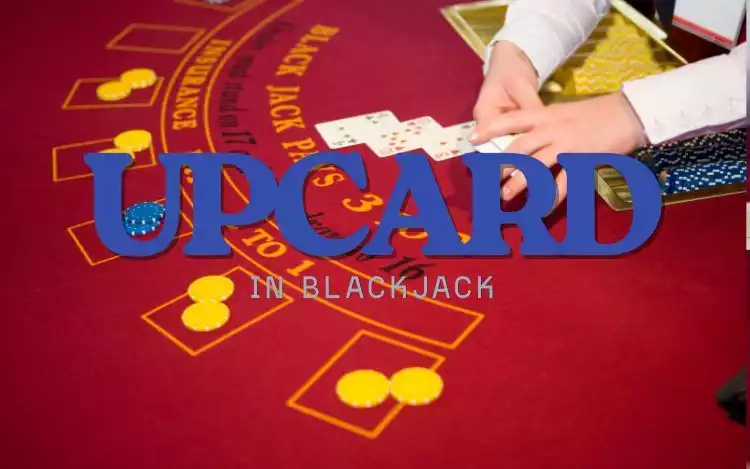
The game of blackjack is one that’s as simple as it is deep, which explains why it has remained such an enduring classic after all these years. The aim of the game remains one - get a hand that is as close to, but not exceeding, a score of 21. But that’s not all, as here you’re playing against the dealer. As such, you’ll also need to defeat their hand if you’re going to get your hands on the payout. To perhaps help with this aim the dealer’s first card is revealed face up for all to see. This is known as the upcard and is the subject of obsession of many a blackjack aficionado. After all, this is not just any card, but the key to entire blackjack strategies. Want to learn more about the upcard in blackjack? Then you’re at the right place so keep on reading until the end.
Turbonino Casino Offer
Advertiser Disclosure: At Gambling Zone, we may earn a referral commission if you sign up through links on our site. This helps support our work and does not influence our independent reviews or ratings. Learn more about our review criteria.
What is the Upcard?
We’ve already briefly described the upcard in our introduction, but we believe we should reiterate on the facts. In blackjack, all players are first dealt two cards face up while the dealer gets one card face up and the other face down. The dealer’s face-up card is the upcard, while the face-down card is known as the hole card. The dealer reveals the hole card at the very end of the round, once all players have finished their actions and revealed their hands.
The upcard provides the player with important information regarding the strength of the dealer’s hand, and as such can shape your entire strategy for the rest of the round. How so? Consider these following pointers:
- If the upcard is weak (2 through 6) there’s a higher chance of the dealer busting. This chance can be anything from 35% to 42%, depending on the value of the card.
- If the upcard is strong (7 through Ace) the chance of the dealer busting is lower. With an Ace, the chance of the dealer busting drops to 17%.
With these two points in mind you now know that your entire strategy should be based around beating the upcard. After all, correct strategic play can lower the game’s house edge to as little as 0.5%, while incorrect play can, and will, swing the odds back in the casino’s favour.
Weak Upcards vs Strong Upcards
Weak Upcards vs Strong Upcards
Previously we’ve mentioned two types of upcards, weak and strong. Why is this the case? Let’s start with weak upcards, which are the ones from 2 through 6. These cards represent a low starting position, and may even even lead to busting. Statistically, 5 represents the weakest upcard, followed by 6 and 4. These are signs that you should respond appropriately, something we’ll tell you how later on in this guide.
Strong upcards, on the other hand, are the cards starting from 7 all the way to Ace. These give the dealer a higher chance of getting a total between 17 and 21 through their hole card. The Ace is particularly powerful, since it can potentially lead to a natural blackjack, and even if it doesn’t it remains particularly flexible.
Building a Basic Strategy Through the Upcard
A basic blackjack strategy is based around the dealer’s upcard. Let’s take a few examples. If you have a “stiff” hand - meaning your first two cards have a total between 12 and 16 - then you’re not only more likely to lose if you hit (as ask the dealer for a third card) but also if the dealer makes a hand. In this case, the pros recommend standing on stiff hands if the dealer has a weak upcard, and hitting if their upcard is strong. This is because your goal is to let the dealer bust in the case of a weak upcard.
Another option available to you in blackjack is doubling down, where you double your bet and receive a third card. This can prove effective when the dealer has a weak upcard and, of course, depending on your hand. Double down on 11 against anything except an Ace, on 10 against a 2-9 upcard, and on 9 against a 3-6 upcard. These plays rely on the increased chances that the dealer will either bust or end up with a mediocre hand.
The upcard also determines when you should split. Always split Aces and 8s, regardless of the upcard, but never split 10s. Split 2s, 3s, 6s, 7s, and 9s selectively depending on the upcard. Splitting 6s against a dealer 2 is good, while splitting against a 7 upcard is not.