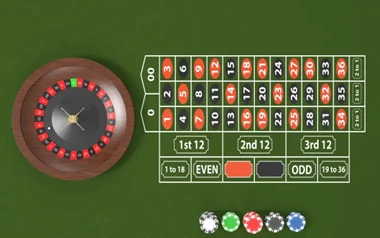





If you have spent time watching roulette in a casino, you may notice that dealers sometimes move between tables during their shifts.
This is usually a normal part of casino operations. Dealer rotations can help manage staffing, provide scheduled breaks and maintain consistent standards across different tables.
A dealer changing tables does not change the odds of roulette or indicate that a particular table is due for a different outcome. The result of each spin remains determined by the ball and wheel.
Why Do Roulette Dealers Change Tables?
The main reason dealers move between tables is operational.
Casinos need to manage their staff across multiple games while also ensuring dealers have appropriate breaks during their shifts. A rotation system allows management to move employees between tables according to the casino's staffing requirements.
Dealer changes can therefore be part of an established shift schedule rather than something triggered by the results of a particular game.
Dealer Rotations Can Help With Breaks
Working continuously at a roulette table requires concentration.
Dealers need to manage the wheel, ball, bets, payouts and interactions with players while following casino procedures. Scheduled rotations can give dealers an opportunity to step away from the table when their break is due.
Why Breaks Matter
Regular breaks can help employees manage fatigue and maintain concentration throughout a shift.
A dealer who remains focused is better positioned to follow established procedures accurately and communicate clearly with players.
The precise length and frequency of breaks will depend on the casino, local employment requirements and the dealer's shift schedule.
Dealers May Work at Different Tables

Dealers May Work at Different Tables
A trained roulette dealer can generally be assigned to different tables within the casino.
Moving between tables can be part of normal scheduling and may expose dealers to different groups of players and different operating environments.
The equipment and procedures can vary between tables, so dealers are expected to follow the rules and procedures applicable to the table where they are working.
What Happens When a Dealer Changes?
The outgoing dealer typically completes the appropriate handover process before the replacement takes over.
This allows the incoming dealer to begin working without disrupting the game unnecessarily.
The exact procedure can vary between casinos, but the objective is to maintain continuity and ensure that the table remains properly supervised.
Can a Dealer's Style Affect Roulette?
Dealers may have different personalities, voices and styles of presentation, but these differences do not give players a reliable way to predict roulette outcomes.
The physical process of spinning the wheel and releasing the ball is subject to variation, and casinos use established procedures to operate the game.
Players should focus on the rules and odds of the roulette variant rather than attempting to identify a particular dealer as lucky or unlucky.
Why Casinos Rotate Dealers Instead of Keeping Them at One Table?
Keeping every dealer permanently assigned to one table may not be practical.
Casinos have changing staffing requirements throughout the day. Tables can open, close or become busier depending on customer demand.
A rotation system gives casino management more flexibility while allowing dealers to take scheduled breaks and work across different tables where required.
What Players Should Know About Dealer Changes

What Players Should Know About Dealer Changes
Seeing a roulette dealer replaced during a shift is normally nothing unusual.
The change may be connected to a scheduled break, staff rotation, changing table demand or other operational requirements. It does not indicate that the table has become more or less likely to produce a particular result.
For players, the important factors remain the roulette variant, the number of pockets, the available bets and the applicable payouts.
FAQs About Roulette Dealer Changes
Why do roulette dealers change tables?
Dealers can change tables as part of staff rotations, scheduled breaks, changing customer demand or other casino operating requirements.
Does changing a roulette dealer affect the odds?
No. The dealer changing does not alter the mathematical odds of the roulette game.
Do casinos change dealers after a losing streak?
A dealer rotation should not be interpreted as a response to losing results. Staffing decisions are generally separate from the outcome of previous spins.
Can a new dealer make a roulette number more likely?
No. A new dealer does not make a particular number, colour or bet more likely to win.
Do roulette dealers get regular breaks?
Dealers may receive scheduled breaks as part of their working arrangements. The exact timing and length can vary between casinos and jurisdictions.
Can the same dealer work at several roulette tables?
Yes. Casinos can assign trained dealers to different tables according to staffing and operational requirements.
Should players change tables when a new dealer arrives?
There is no mathematical reason to change tables simply because the dealer changes. Players should make table decisions based on the game's rules, limits and their own gambling preferences rather than perceived dealer luck.
Does a dealer's technique affect roulette outcomes?
Dealer actions are part of the physical game, but players cannot reliably predict outcomes based on a dealer's identity or perceived style. Roulette remains a game of chance.