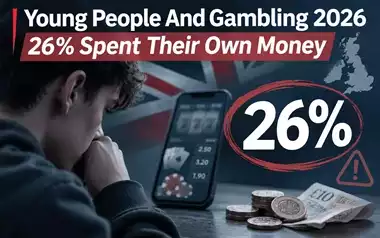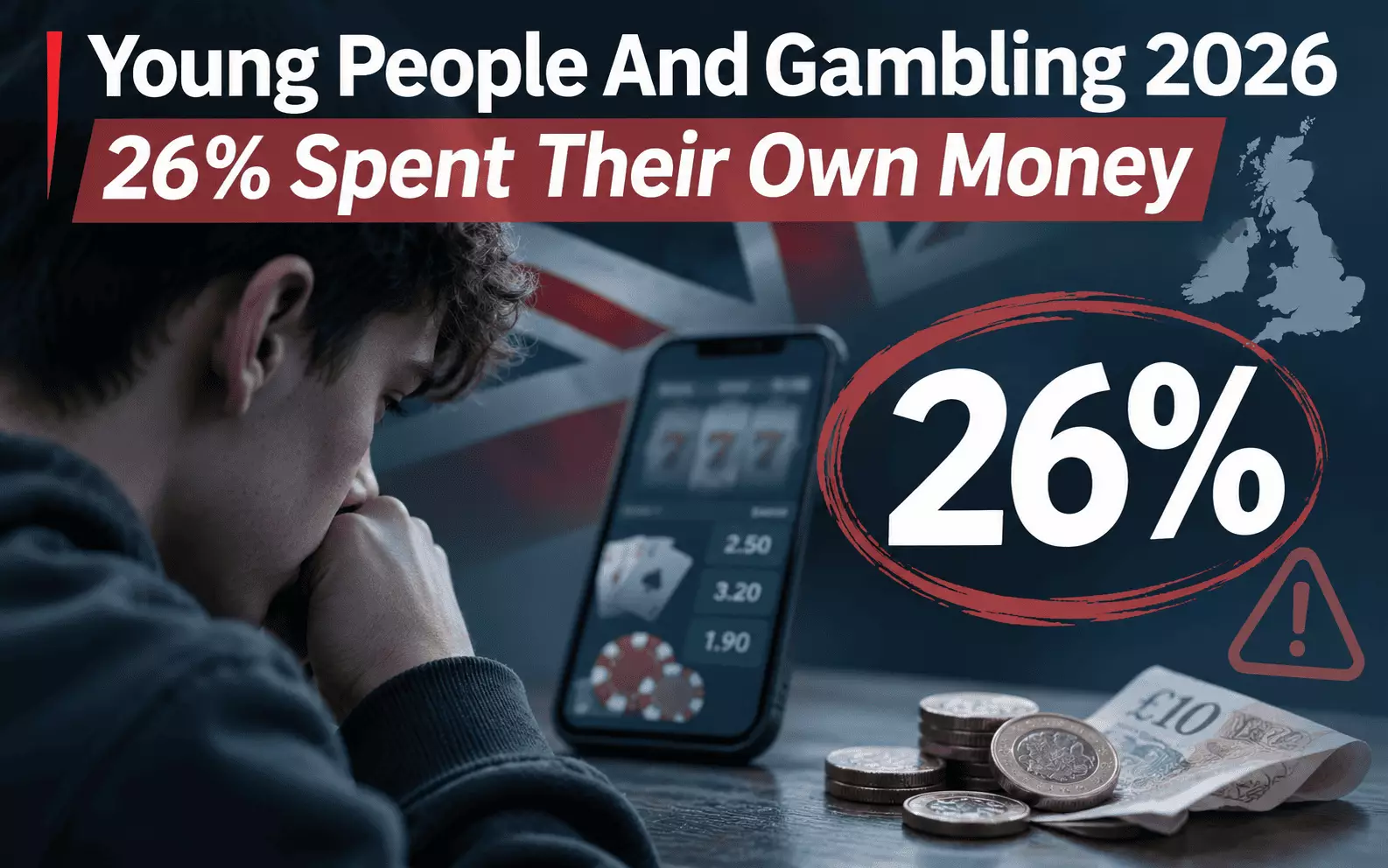
The Gambling Commission's Young People and Gambling 2026 report, produced by Ipsos and published on 12 November 2026, found that fewer 11 to 17 year olds are spending their own money on gambling. 26% did so in the past 12 months, down from 30% in 2025 and 31% in 2022, and the Commission says most of that gambling was legal or not age restricted.
What The Survey Covered
The survey asked 3,867 pupils in Years 7 to 12, or Years S1 to S5 in Scotland, at academies, maintained and independent schools in England, Scotland and Wales. They completed an online questionnaire in class between 12 January and 12 June 2026. The report counts pocket money, birthday money and money they earned themselves as their own money.
Spending And Activities
Activities that are not age restricted accounted for most of the spending: 24% of young people spent their own money on them, against 5% on age-restricted activities. The report defines age-restricted gambling as activities licensed and regulated by the Commission so that under-18s cannot take part, including betting and casino gaming with licensed operators, National Lottery products and gaming machines in betting shops.
Arcade gaming machines such as penny pushers and claw grab machines were the most common activity, at 19%, followed by betting for money between friends or family at 11% and playing cards for money at 5%. Just 1% each reported spending their own money on National Lottery scratchcards, a betting website or app, an online game on a casino website or an esports bet.
Wider experience of gambling is more common than spending. 55% of young people had some experience of gambling, such as picking lottery numbers with family, and 45% had taken part in at least one gambling activity in the past 12 months. In 2022 the figures were 60% and 50%.
How The Screen Classifies Young People
The report sorts all 11 to 17 year olds into four groups using its youth problem gambling screen, which only young people who spent their own money in the past 12 months complete. The report classes 74.0% as never having gambled, up from 69.6% in 2025, a significant increase. 23.1% scored 0 or 1 and 2.0% scored 2 or 3. 0.9% scored 4 or more, which the report describes as experiencing problems with gambling, against 1.2% in 2025. That difference is not statistically significant, and the Commission says the screen is not a clinical diagnosis.
Advertising, Gaming And Awareness
89% of young people recalled seeing or hearing gambling advertising or promotions in the past year. They were most likely to see it at least weekly on social media (55%), live streaming or video sharing platforms (53%), television (52%) and apps (51%). 15% follow gambling-related content on social media or streaming platforms, and 38% of them said influencers, creators or streamers they followed had advertised gambling-related content to them. Of the young people who had seen gambling advertising, 10% said it prompted them to spend money on gambling when they had not planned to, although the report notes that some of these respondents did not report gambling anywhere else in the survey.
The report also covers gaming, which the Commission does not regulate. 22% of all 11 to 17 year olds opened virtual loot boxes or surprise boxes using their own money. 81% felt well informed about the risks of gambling, and 68% said someone had spoken to them about the problems it can cause.
What The Commission Said
Ben Haden, the Commission's Director of Research and Statistics, said the Commission's focus is on "ensuring that children and young people are not able to spend money on age-restricted gambling products, with an appreciation of the wider context". The Commission requires gambling operators to have robust protections in place to prevent children from accessing age-restricted products such as betting in a bookmakers or playing an online casino, and notes that some gambling activities are legal or not restricted for this age group.
How To Read The Figures
All findings are self-reported, and the Commission says they are estimates of young people's reported experiences and behaviours, not independently verified measures of their activity. The survey does not cover young people who are not in mainstream education, who chose not to take part or who were absent on the day. The survey broadened its sample from 2023 to include Year 12 pupils and independent schools, so some differences from 2022 may reflect the sample as well as real change. Following user feedback, the Commission says it strengthened the report's information on the research's strengths and limitations. Across 2022 to 2026 the report finds an overall decline in participation, with participation rising in 2025 before returning to lower levels in 2026.